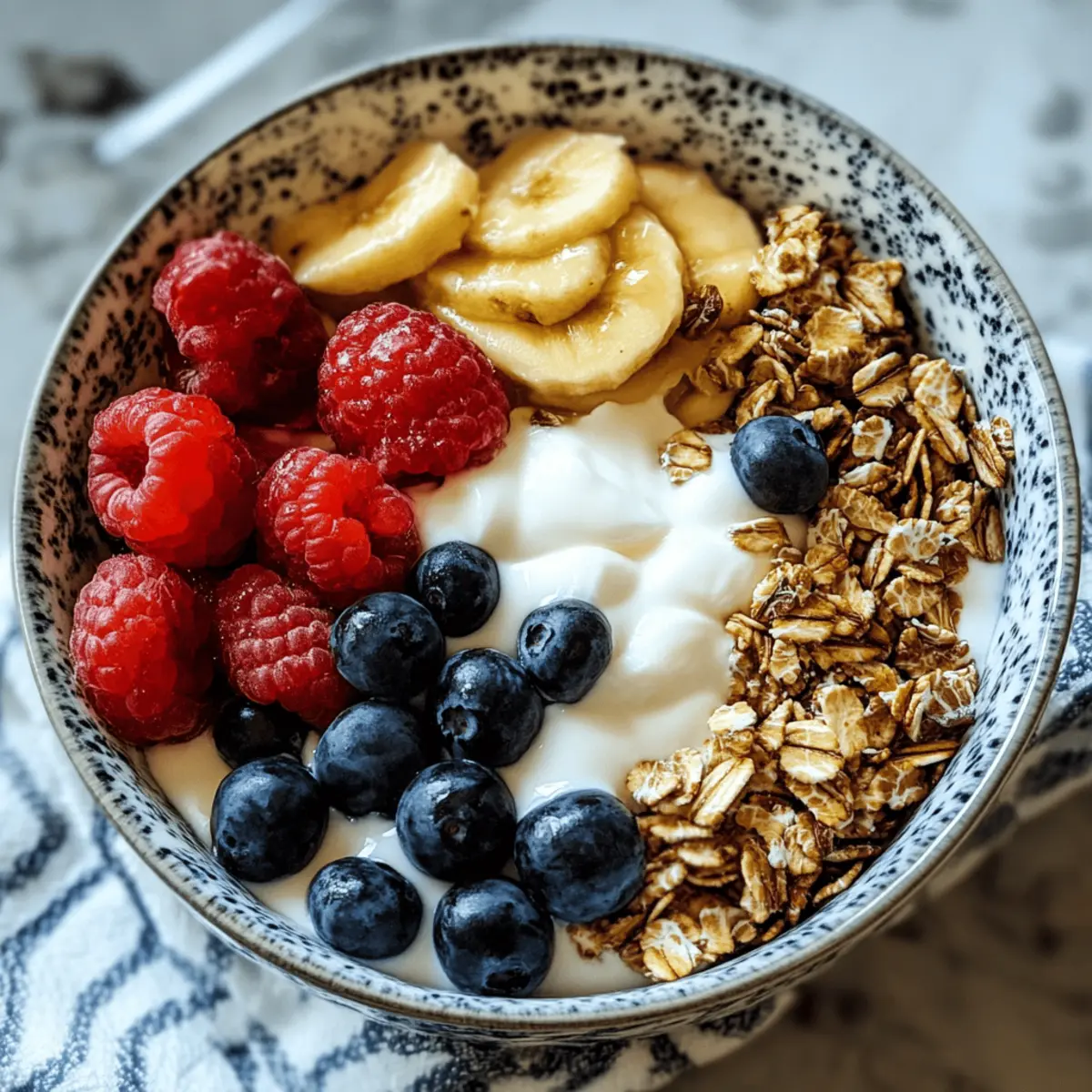
It is 7:42am. You woke up late. You have 15 minutes before you need to leave. The idea of cooking anything feels out of the question, and grabbing something on the way means spending money you did not plan to spend. You need quick breakfast ideas before work — things that take under 5 minutes, require no real cooking, and actually keep you full past 10am.
This happens to most working adults in Europe several times a week. According to Mintel’s UK Breakfast Habits Report 2025, 38% of UK breakfast eaters regularly skip it — and among 16 to 34-year-olds, that figure rises to 55%. The main reason cited is not preference. It is time.
The problem is that skipping breakfast on a workday costs you more than the 5 minutes you saved. A 2025 study published in Diet Factor found that breakfast skipping among office workers is significantly associated with reduced self-reported productivity, 23% higher fatigue during the day, and measurably slower cognitive response times — effects that kick in well before lunch (Diet Factor — Breakfast Skipping and Workplace Productivity, 2025).
Short answer: overnight oats prepared the night before, toast with peanut butter or eggs, a yogurt and banana, a smoothie made in 2 minutes, or a wrapped flatbread with whatever is in the fridge. All of these quick breakfast ideas before work take under 5 minutes to prepare and require no cooking skill.
6 Quick Breakfast Ideas Before Work That Actually Work
These are not elaborate recipes. They are the fastest options that still give you real energy for the morning — not a sugar spike that crashes by 9am.
1. Overnight Oats — 0 Minutes in the Morning (Prep the Night Before)
This is the most effective quick breakfast for busy mornings because the preparation time on the day itself is zero. You make it the night before in about 3 minutes.
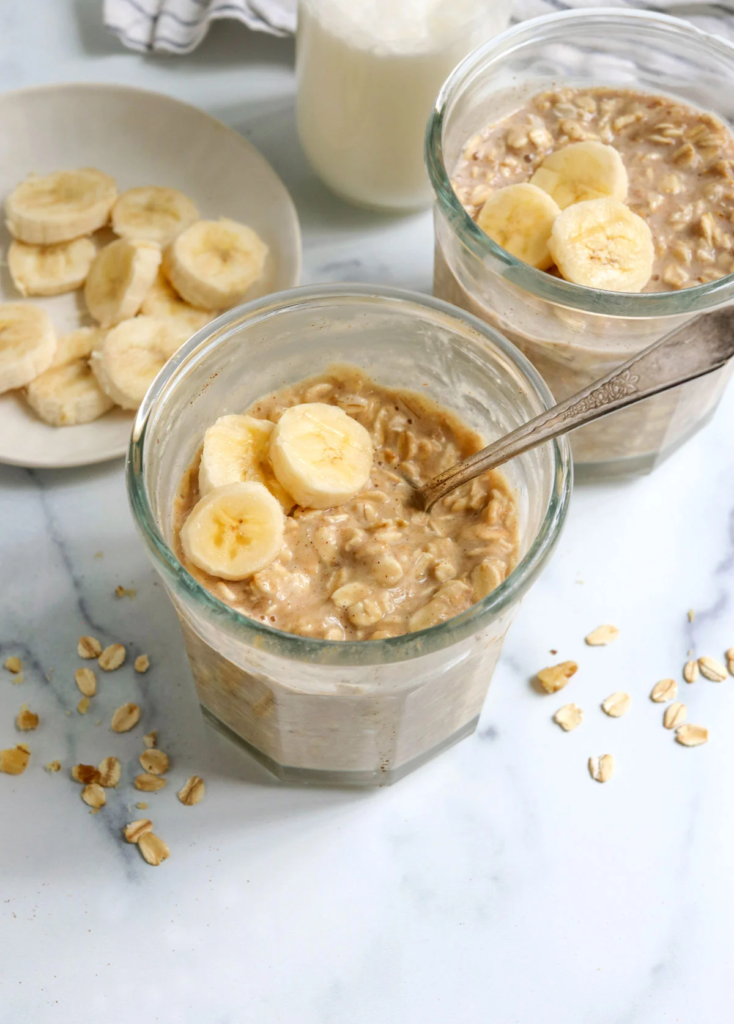
Mix 80g of rolled oats with 200ml of milk or a plant-based alternative in a jar or container. Add a teaspoon of honey or jam if you want sweetness. Close the lid and put it in the fridge. In the morning, take it out and eat it cold — no heating, no washing up beyond a spoon and a jar.
The result is a genuinely filling breakfast because oats are one of the highest-fibre grains available, and the milk adds protein. According to the NHS Eatwell Guide, meals that combine fibre and protein keep you fuller for longer and provide more sustained energy than high-sugar options. Overnight oats do exactly this with no effort on the morning itself.
Add a banana on top, a handful of frozen berries (they defrost by the time you eat), or a spoonful of peanut butter. None of it is required but any of it makes it better. You can also take the jar with you on the commute if you run out of time.
2. Toast With Peanut Butter and Banana (4 minutes)
Two slices of whole grain toast, a tablespoon of peanut butter, half a banana sliced on top. This takes 4 minutes including the toasting time, requires no cooking skill, and provides a solid combination of complex carbohydrates, protein, and healthy fat.

Peanut butter specifically is worth keeping for morning situations. It is inexpensive, keeps for months, requires no preparation, and provides around 8g of protein per two tablespoons. Combined with the fibre from whole grain bread and the potassium and natural sugars from banana, it produces a breakfast that holds energy levels steadily rather than causing a blood sugar spike.
If you do not have banana, peanut butter on toast on its own is still a proper breakfast. A drizzle of honey or some sliced apple work just as well. The combination is flexible — what matters is the toast plus a protein source on top.
3. Scrambled Eggs on Toast — The Fast Version (6 minutes)
Most people make scrambled eggs too slowly. The version for busy mornings takes 6 minutes total including toasting.

Put two slices of bread in the toaster. Crack two eggs into a cold pan with a small knob of butter. Turn the heat to medium. Stir continuously with a spatula — the eggs should be moving at all times. Remove from the heat about 30 seconds before they look done because they carry on cooking from the residual heat. Season with salt.
Two eggs on two slices of whole grain toast provides around 20g of protein and enough sustained energy to get you past the mid-morning slump without needing a snack. According to a 2025 systematic review published in Nutrition Research, regular breakfast consumption that includes protein is associated with better metabolic function and reduced fatigue compared to skipping or eating a carbohydrate-only breakfast (PubMed — Systematic Review on Breakfast Skipping, 2025).
If 6 minutes feels too long, a fried egg requires even less attention: oil in pan, crack egg, leave it for 3 minutes, put it on toast.
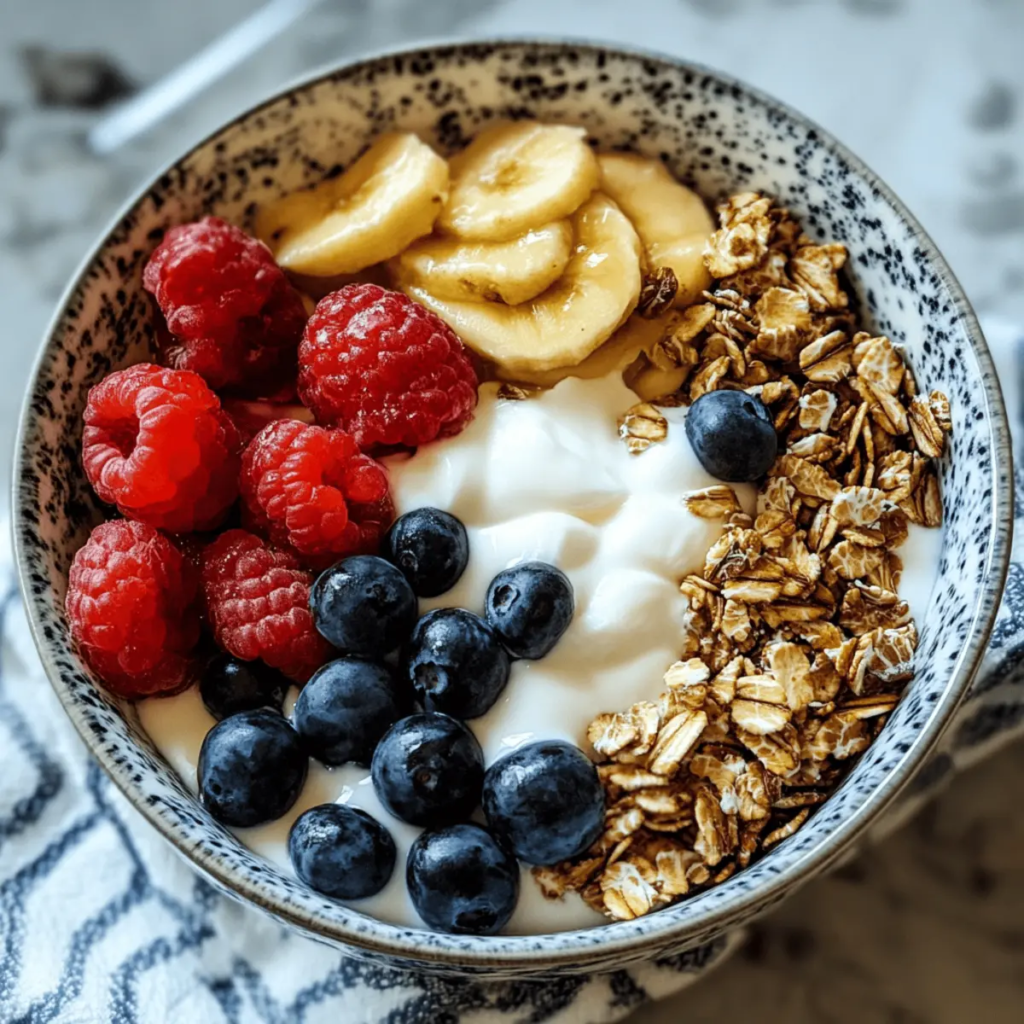
4. Greek Yogurt With Whatever Is Around (2 minutes)
A pot of Greek yogurt with a handful of granola, some fruit, or a drizzle of honey takes 2 minutes and requires nothing except opening containers and mixing.
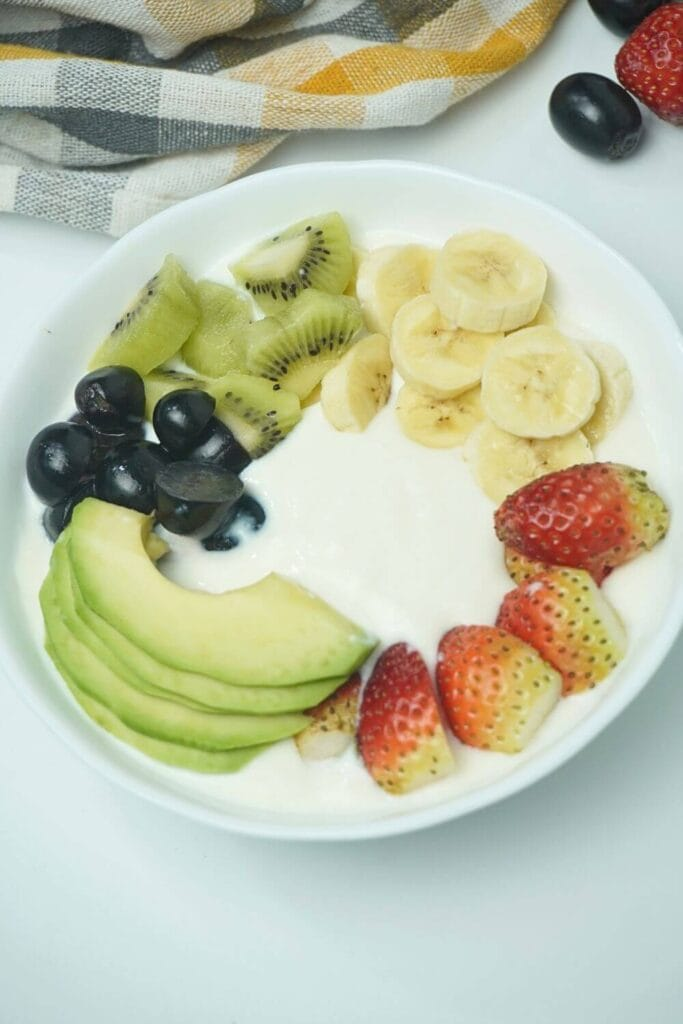
Greek yogurt is higher in protein than regular yogurt — typically 10–12g per 150g serving — making it one of the most efficient quick breakfast options available. It also requires no preparation, no equipment, and no cooking.
The key is keeping a pot in the fridge specifically for mornings. Lidl, Aldi, and most European supermarket own-brands sell Greek yogurt for under €1 per large pot. Pair it with a piece of fruit for fibre, or a tablespoon of nut butter stirred in for fat. Either way, it is on the table in under 2 minutes.
If you are on the way out the door, this is one of the easiest breakfasts to eat while standing or even to take with you.
5. A 2-Minute Smoothie (2 minutes with a blender)
Banana, milk or yogurt, and whatever else is in the fridge or freezer — all blended together in 90 seconds. This is fast because there is no cooking, no washing up beyond the blender cup, and it can be drunk on the commute.
The base: one banana, 200ml milk or yogurt, a small handful of frozen berries or spinach. Blend. Drink. That is it. Adding a tablespoon of oats thickens it and adds fibre. Adding peanut butter adds protein and keeps you fuller longer.
Frozen fruit specifically is worth keeping for this. It costs less than fresh, lasts months, and goes straight from the freezer into the blender with no preparation. A bag of frozen spinach sounds strange in a smoothie but is genuinely undetectable when mixed with banana, and adds iron and vitamins without any taste.
If you often run late, a smoothie is the one breakfast that requires the least time and can be consumed while commuting — making it the fastest real breakfast option that still provides nutritional value.
6. Flatbread or Wrap With Whatever Is In the Fridge (3 minutes)
A flatbread, tortilla wrap, or pitta loaded with whatever is available — hummus, cheese, a sliced boiled egg, leftover vegetables, tuna from a tin — takes 3 minutes and travels well if you need to eat on the way.
This option works well because flatbreads and wraps keep for a week in the fridge and are extremely cheap. They require no toasting, no cooking — just spreading and rolling. If you keep hummus or a block of cheese in the fridge, you always have the components for this breakfast without any shopping.
For the evenings when you have slightly more time and want to prepare for the morning, having a few hard-boiled eggs already made is the fastest addition to this or any other breakfast. Eggs boil in 9 minutes and keep in the fridge for a week — making them a permanent morning protein source that requires no effort on the day itself.
What to Do When You Have Literally 60 Seconds
If you are walking out the door right now: banana plus a handful of nuts. That is it. A banana provides quick-release energy from natural sugars and potassium, while a small portion of nuts provides fat and protein that slows the energy release down. You can eat both in 90 seconds.
Keep a bag of mixed nuts next to the fruit bowl specifically for this situation. It is not a perfect breakfast but it is far better than leaving the house with nothing, and takes no preparation at all.
Quick Tips Worth Knowing
- A 2025 study found that office workers who skip breakfast have 14% higher fatigue levels and significantly slower reaction times by mid-morning compared to those who eat something, regardless of what they eat (Diet Factor, 2025). Something is always better than nothing.
- Preparing the night before removes the morning decision entirely. Overnight oats, portioning yogurt into a container, or having a boiled egg ready in the fridge all require 3 minutes the night before and zero effort in the morning.
- Protein at breakfast extends fullness significantly more than carbohydrates alone. Eggs, yogurt, peanut butter, and nuts all provide enough protein to keep you full past 11am.
- The NHS recommends avoiding high-sugar breakfasts such as heavily sweetened cereals, as they cause rapid blood sugar spikes followed by a mid-morning energy crash that affects concentration — exactly when most people need to focus (NHS Eatwell Guide).
- If you regularly have no time for breakfast, the root problem is usually the morning routine, not the food. A piece on how to start a simple morning routine covers the smallest possible changes that create real time in the morning.
Related Situations You Might Also Be Dealing With
If mornings are consistently rushed, it is worth thinking about evenings too — because most good quick breakfast ideas before work are prepared the night before, not the morning of. The guide on quick dinner ideas after work covers how to handle evenings efficiently, which creates more mental space for morning preparation.
When money is also a factor in the morning, eggs, oats, bananas, and peanut butter are among the cheapest ingredients in any European supermarket. The budget grocery list for the week includes all of these specifically because they cover multiple meals including breakfast.
And if the evening before was too exhausting to prepare anything, the piece on what to eat when too tired to cook applies to mornings just as much as evenings — the same no-effort logic works for both.
FAQ
What is the quickest breakfast before work? A banana and a handful of nuts takes 60 seconds and requires no preparation. Greek yogurt takes 2 minutes. Toast with peanut butter takes 4 minutes. Overnight oats prepared the night before take zero time in the morning. Any of these count as quick breakfast ideas before work that provide real energy without cooking.
What should I eat for breakfast when I have no time? Overnight oats prepared the evening before require zero morning effort. If you have nothing prepared, a banana with peanut butter on toast takes under 4 minutes and provides enough protein and carbohydrate to get through the morning without an energy crash.
Is it better to skip breakfast or eat something small? Research consistently shows that eating something small is better than skipping. A 2025 study in Diet Factor found breakfast skipping is associated with 23% higher fatigue and slower cognitive performance among office workers. Even a banana and yogurt is measurably better than nothing for sustained energy and focus.
What is the healthiest quick breakfast for a busy morning? Overnight oats with fruit and a protein source like Greek yogurt or nuts ticks the most nutritional boxes: fibre, protein, complex carbohydrates, and natural sugars. According to the NHS Eatwell Guide, this combination provides steady energy and supports concentration throughout the morning.
Sources
- Mintel UK Breakfast Eating Habits Report 2025 — UK breakfast skipping statistics, 55% of 16–34 year-olds skip breakfast — https://store.mintel.com/report/uk-breakfast-eating-habits-market-report
- Diet Factor — Breakfast Skipping on Functional Capacity and Productivity among Office Workers, 2025 — https://www.dietfactor.com.pk/index.php/df/article/download/182/154/888
- PubMed / Nutrition Research — Systematic review on breakfast skipping: health consequences including cognitive decline and metabolic disruption, 2025 — https://pubmed.ncbi.nlm.nih.gov/40845418/
- NHS Eatwell Guide — Balanced breakfast guidance, fibre and protein recommendations, avoiding high-sugar breakfasts — https://www.nhs.uk/live-well/eat-well/food-guidelines-and-food-labels/the-eatwell-guide/
- ScienceDirect / Nutrition Research — Systematic review on skipping breakfast: metabolic disruptions, obesity and socioeconomic factors, 2025 — https://www.sciencedirect.com/science/article/abs/pii/S0271531725000946
- PMC — Editorial on breakfast habits, effects and cognitive functioning across global populations — https://www.ncbi.nlm.nih.gov/pmc/articles/PMC11447757/