
You just got home. You have been on your feet — or in front of a screen — for nine hours. Your brain is done. The idea of standing at a stove, making decisions, chopping things, and washing up afterwards feels genuinely impossible. You are not hungry for food so much as you are hungry for it to already be in front of you.
This is what to eat when too tired to cook — not a list of “easy recipes” that still require 30 minutes and a clean kitchen, but the actual lowest-effort options that work when your energy is at zero.
Short answer: eggs in any form, one-pot pasta cooked in its own sauce, tinned food over rice, a no-cook assembly plate, or anything from your freezer that goes straight into a pan. Every option in this article takes under 15 minutes and requires almost no active attention.
Why Exhaustion Makes Cooking Feel Impossible
It is not weakness. There is a documented reason why cooking feels so hard on certain evenings.
Work-related stress costs the European Union an estimated €25.4 billion annually, and emotional exhaustion — the feeling of being completely drained after a day of work — is one of its most common symptoms, according to a systematic review published in the International Journal of Environmental Research and Public Health. The same review found that exhausted people have lower levels of dopamine and norepinephrine, the brain chemicals that make tasks feel manageable rather than overwhelming.
Research published in the American Journal of Clinical Nutrition found that women experiencing occupational burnout had significantly higher emotional eating scores than those without burnout — meaning exhausted people are more likely to reach for comfort food or skip cooking entirely, not because of poor choices but because their self-regulation capacity is depleted (ScienceDirect — Burnout and Eating Behaviour).
Mental Health UK’s Burnout Report 2026 confirmed the same pattern in the UK, noting that excessively tired workers frequently report changes in eating habits as one of the first visible behavioural signs of burnout (Mental Health UK Burnout Report).
None of this means you need to fix your habits. It means your body is behaving exactly as expected under stress. The solution is not willpower — it is having meals planned that require so little effort that exhaustion is not a barrier.
5 Real Dinners for When You Are Too Tired to Cook
These are not recipes. They are situations — what you actually do when you open the fridge and feel nothing.
One-Pot Pasta in Tomato Sauce — No Draining Required (12 minutes)
Standard pasta requires boiling water, watching the time, draining, and then making a sauce separately. That is at least three things. When you are exhausted, three things is too many.
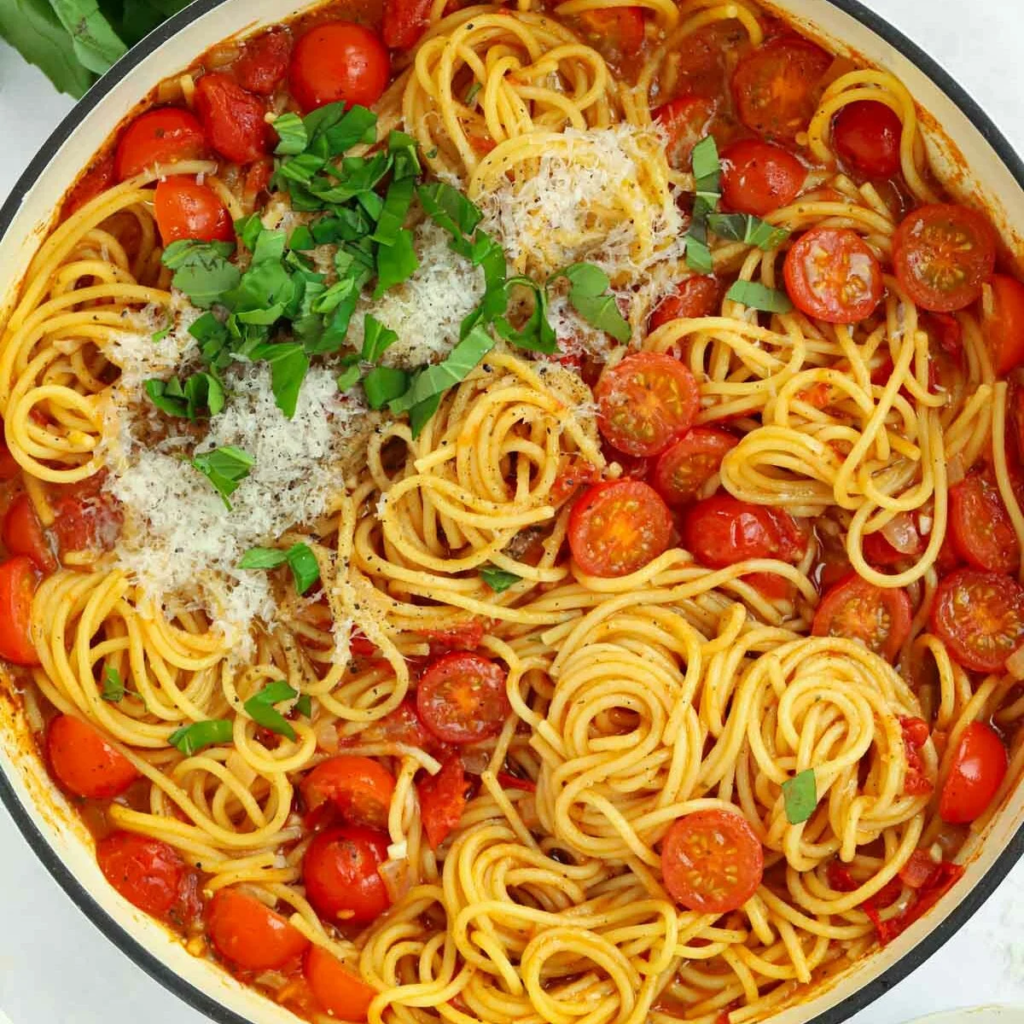
One-pot pasta removes the draining step entirely. Put pasta in a wide pan. Add enough water to just cover it — around 300ml for a single portion. Add a tin of chopped tomatoes, a crushed garlic clove, a pinch of salt, and a drizzle of olive oil. Bring to a boil, then stir regularly as the pasta absorbs the liquid. After 10–12 minutes, the water is gone and the tomato sauce has thickened around the pasta. One pan. No draining. Parmesan on top if you have it.
This is the most genuinely low-effort hot meal that exists. The pasta starch thickens the sauce naturally, so it actually tastes like you made something. If you want to stretch the meal with almost no extra effort, a guide on how to make pasta more filling on a budget covers simple additions that make a real difference.
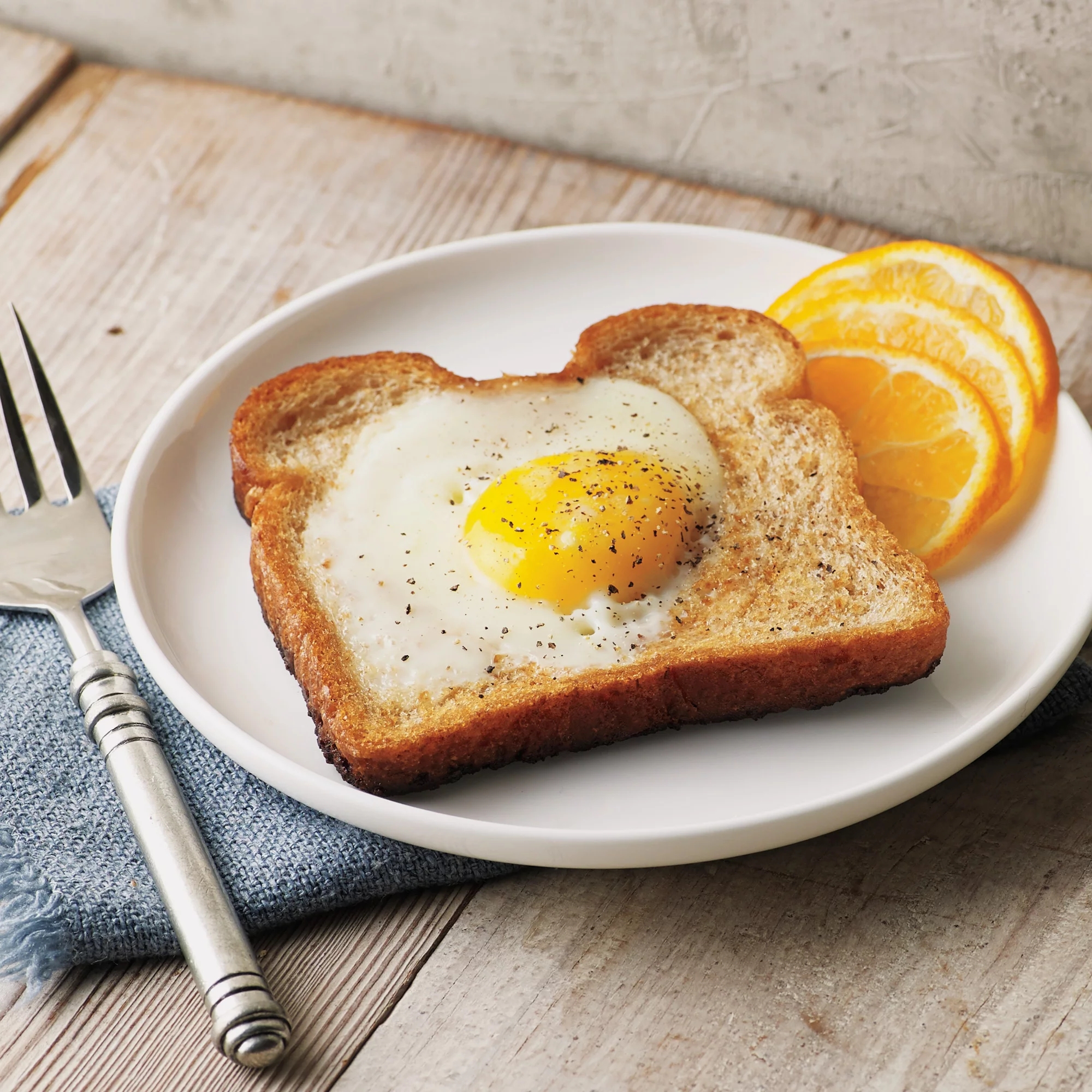
Eggs on Toast — The Correct Version (8 minutes)
Eggs on toast is dismissed as a lazy meal when it is actually one of the most nutritionally complete fast dinners available. Two eggs provide around 12g of protein and a range of vitamins including B12, D, and choline. Whole grain toast adds fibre. Together they take 8 minutes.
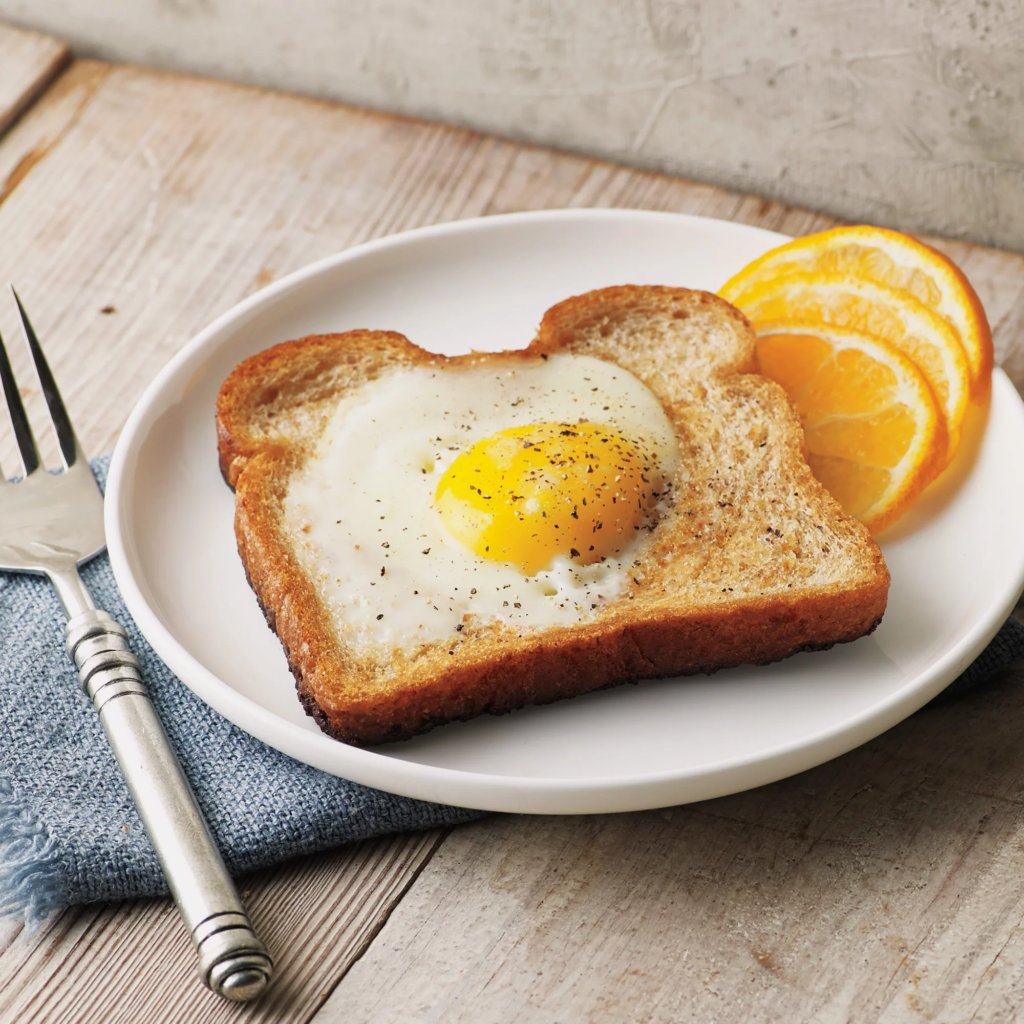
The version that requires the least thought: scrambled. Crack two eggs into a cold pan with a small knob of butter or olive oil. Turn the heat to medium-low. Stir slowly as the eggs set — pull them off the heat while they still look slightly underdone and let the residual heat finish them. They stay soft. Add salt, pepper, and whatever is on the counter: hot sauce, a squeeze of lemon, dried chilli, a slice of cheese melted on top.
If the idea of even scrambling eggs is too much, a fried egg works too. Oil in pan, crack egg, 3 minutes, done. Put it on toast with whatever is in the fridge door.
Tinned Fish Over Microwave Rice (8 minutes)
A tin of tuna, sardines, mackerel or salmon. A packet of microwave rice. Something green if you have it — cucumber, lettuce, frozen peas microwaved for 2 minutes.
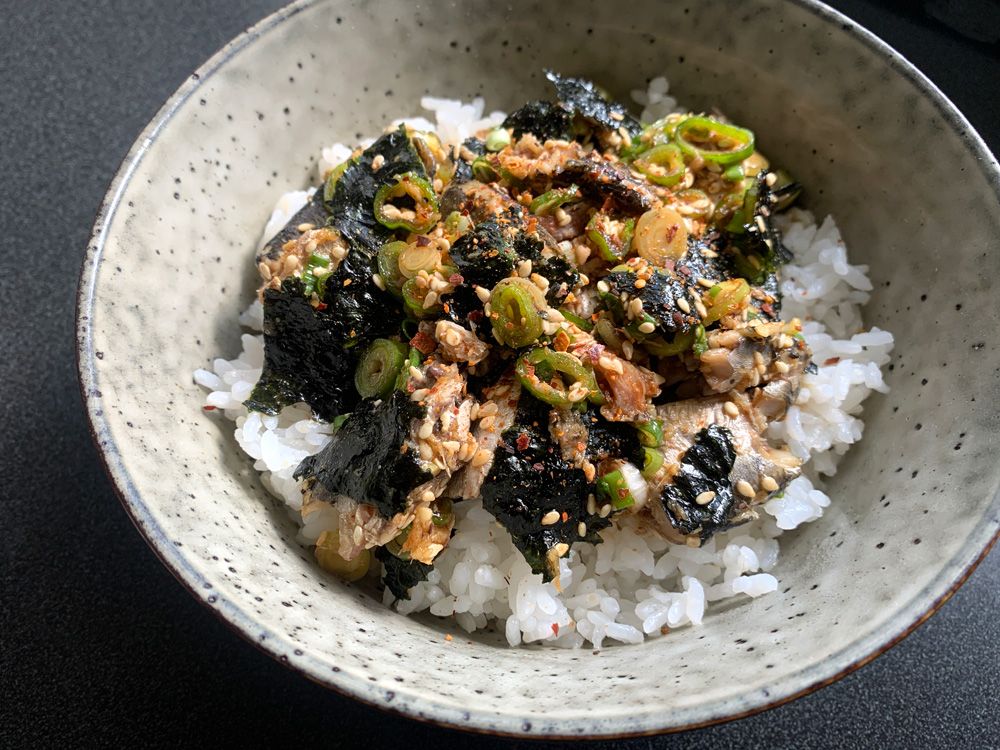
This is not a recipe. It is assembly. Microwave the rice (90 seconds), open the tin, combine on a plate. Add soy sauce or lemon juice or olive oil. Done in under 8 minutes with one packet and one tin.
Sardines are worth keeping specifically for this situation. They are inexpensive, long-lasting, and higher in omega-3 fatty acids than most fresh fish, according to the NHS Eatwell Guide. Unlike fresh fish, they require no preparation and no skill. Open the tin, serve over rice or toast, and eat.
BBC Good Food has a practical breakdown of cooking with tinned fish if you want to go further than the basics — but on the nights you cannot function, tinned fish straight from the can is perfectly fine.
The No-Cook Assembly Plate (5 minutes)
Some evenings, cooking is not the right answer. A no-cook plate — bread, cheese, sliced meat, hummus, raw vegetables, olives, hard-boiled eggs if you have them, anything from the fridge door — takes 5 minutes and does not require the stove.
This is how large parts of southern Europe eat several evenings per week. A spread of things on a board is not a failure to cook. It is dinner. The goal is to eat something real, and this qualifies.
Keep a few things specifically for this scenario: a good tin of olives, a block of cheese that keeps well, a pack of crackers or flatbreads. These last weeks in the fridge and cupboard and mean you always have the no-cook option available without shopping for it.
Frozen Dumplings or Gyoza (10 minutes)
Most large European supermarkets now carry frozen dumplings, gyoza, or pierogi in the freezer section. They cost around €2–3 for a portion and cook in 8–10 minutes: add a small amount of oil to a pan, place the dumplings in, fry for 3 minutes until the bases are golden, then add a splash of water and cover the pan to steam for another 5 minutes. Done.
This is a legitimate dinner. The dipping sauce takes 30 seconds: soy sauce, a drop of rice vinegar if you have it, a pinch of chilli. If you do not have any of that, plain soy sauce is fine.
Keep a bag of frozen dumplings as a permanent reserve. They last months in the freezer, cost less than a takeaway, and require almost no active time.
What to Do When You Have Absolutely Zero Energy
If everything above still sounds like too many steps: microwave rice packet, tin of chickpeas or lentils, olive oil and salt.
Open the rice packet. Microwave 90 seconds. Open the tin. Drain. Combine in a bowl. Add oil and salt. Eat. This is 3 minutes and it is real food. Keep these two items stocked at all times specifically for the absolute worst evenings.
Quick Tips Worth Knowing
- Finnish municipal employee research found that people who eat more regular home-cooked meals have significantly lower burnout severity scores over time — the habit of eating properly creates a positive loop rather than a draining one (PMC — Diet and Burnout, Helsinki Study).
- The real barrier on exhausted evenings is not cooking skill — it is the cognitive overhead of deciding what to make. Having a short list of 5 fixed meals removes this decision entirely. Pick one and do it every time you hit this state.
- Prepare for these evenings in advance: keep a designated “exhausted shelf” in your kitchen with the exact ingredients needed for your fallback meals. You should never have to think about what to do when you are too tired to cook.
- Frozen vegetables go straight into most of these meals from the bag. Keep a bag of frozen spinach, frozen peas, or frozen stir-fry mix as a permanent veggie source that requires no prep.
- If you have leftover cooked rice or pasta in the fridge, these meals take 3 minutes less because the carb is already done.
Related Situations You Might Also Be Dealing With
If tiredness is your regular evening state rather than an occasional one, it is worth looking at the earlier stages of the day too. Having a plan for dinner starts with having the right things in the kitchen — a budget grocery list built around low-effort staple meals means you are never stuck trying to cook something from nothing at 7pm.
When money is also tight on top of the exhaustion, there is a specific guide on cheap meal ideas for the weeks when you are broke that covers the same low-effort approach with an even smaller budget.
And if the problem is not just evenings but mornings too, a piece on quick breakfast ideas when you are running late uses the same no-decision framework for the start of the day.
FAQ
What should I eat for dinner when I am too tired to cook? The most realistic options when too tired to cook are: one-pot pasta in tomato sauce (12 minutes, one pan), scrambled eggs on toast (8 minutes), tinned fish over microwave rice (8 minutes), a no-cook assembly plate of bread, cheese and whatever is in the fridge (5 minutes), or frozen dumplings pan-fried from frozen (10 minutes). All require minimal decisions and almost no active attention.
Is it okay to eat simple food like eggs or toast for dinner? Yes. Eggs on toast is a nutritionally complete meal providing protein, fat, carbohydrate, and a range of vitamins. The NHS Eatwell Guide includes eggs as a core protein source. Eating simply on tired evenings is a sensible response to exhaustion, not a dietary failure.
What is the easiest dinner to make when exhausted? A no-cook assembly plate requires no cooking at all — bread, cheese, tinned fish, hummus, raw vegetables, and anything in the fridge door. If you want something warm, microwave rice with tinned chickpeas and olive oil takes 3 minutes and no skill.
Why does cooking feel so hard when I am tired? Exhaustion depletes the brain chemicals responsible for motivation and decision-making, particularly dopamine. Research published in the International Journal of Environmental Research and Public Health found that emotionally exhausted people have measurably lower capacity for self-regulation — meaning cooking requires more mental effort than it would on a rested day. The solution is removing decisions in advance, not pushing through with willpower.
Sources
- PMC / International Journal of Environmental Research and Public Health — Systematic review on energy balance, burnout and eating behaviour in adults, EU burnout costs — https://www.ncbi.nlm.nih.gov/pmc/articles/PMC7071204/
- ScienceDirect / American Journal of Clinical Nutrition — Occupational burnout, emotional eating and weight in working women — https://www.sciencedirect.com/science/article/pii/S0002916523027259
- Mental Health UK — Burnout Report 2026, eating habit changes in exhausted UK workers — https://mentalhealth-uk.org/burnout/
- PMC — Association between healthy diet and burnout symptoms, Finnish municipal employees — https://pmc.ncbi.nlm.nih.gov/articles/PMC8308766/
- NHS — Eatwell Guide, nutritional guidance on fish, eggs and balanced eating — https://www.nhs.uk/live-well/eat-well/food-guidelines-and-food-labels/the-eatwell-guide/
- BBC Good Food — Tinned fish cooking guide and recipe ideas — https://www.bbcgoodfood.com/recipes/collection/tinned-fish-recipes