
It is the end of the month. Your account is almost empty, the fridge has a sad collection of leftovers, and you still have five days until payday. You need cheap meal ideas when broke — not Pinterest recipes that somehow require expensive ingredients, but real meals you can make right now with almost nothing.
This happens to a lot of people. UK food prices rose by 38.6% between 2020 and 2025 according to the House of Commons Library, and in January 2026, 12% of UK households experienced food insecurity — that is 6.3 million adults (Disability Rights UK, 2026). Across the EU, nearly 9% of households cannot afford a proper meal every second day (Eurostat).
So if you are reading this, you are not doing something wrong. The numbers are just hard right now.
The short answer: eggs, pasta, tinned legumes, rice, and frozen vegetables are the cheapest ingredients in any European supermarket and they can produce dozens of different meals. Every idea in this article costs under €3 per serving and uses things you can buy today with very little money.
Cheap Meal Ideas When You’re Broke: The 5 Best Options
These are not recipes in the traditional sense. They are formulas — flexible enough to work with whatever is cheapest in your local shop or already sitting in your kitchen.
1. Pasta e Fagioli — Pasta and Beans (Under €1 per serving)
A tin of white beans or cannellini beans costs around €0.60–0.80 in most European supermarkets. A portion of dried pasta costs almost nothing. Together they make pasta e fagioli — an Italian dish that has fed working-class families for centuries and tastes far better than the price suggests.
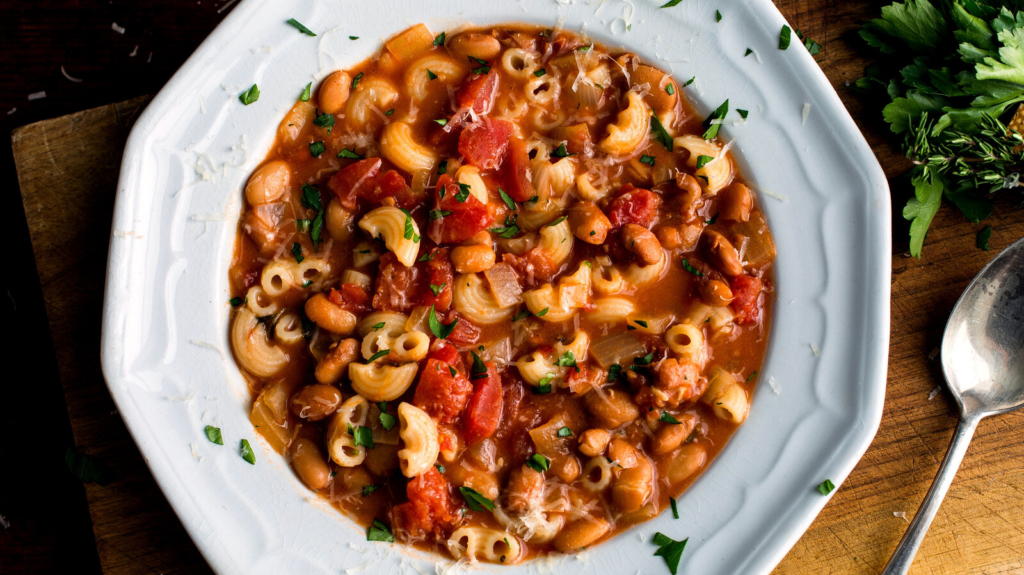
Heat a little olive oil in a pan. Add a crushed garlic clove if you have one, then pour in a tin of beans with their liquid. Add a tin of chopped tomatoes if you have one — if not, just water and a stock cube. Let it simmer for 10 minutes, then add your pasta directly to the pot and cook until done. The starch from the pasta thickens the broth naturally. Add salt, black pepper, and a drizzle of olive oil to finish.
Total cost: under €1.50 for two portions. It is filling, genuinely good, and requires almost nothing.
If you want to stretch your budget further across the week, check the guide on building a budget grocery list for the week — it covers exactly which ingredients give you the most meals for the least money.
2. Egg Fried Rice (Under €1 per serving)
This is arguably the best cheap meal in existence. A cup of rice, two eggs, a splash of soy sauce, and a handful of frozen vegetables — that is it. Total cost per serving: around €0.80.
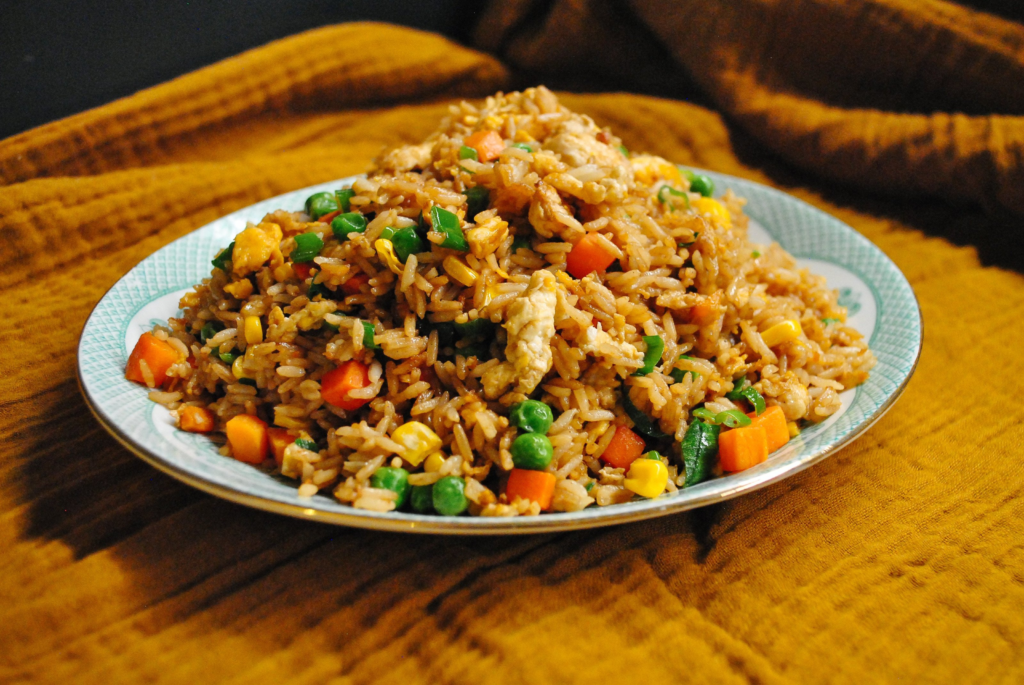
Cook the rice first and let it cool slightly. Heat a little oil in a pan, crack in two eggs and scramble them, then add the rice and break up any clumps. Add the frozen vegetables straight from the bag — they defrost in the pan in two minutes. Splash in soy sauce, stir, done. It takes 12 minutes from start to finish.
If you have a leftover onion or any other vegetable going soft in the fridge, chop it in. Leftover chicken, ham, or tinned tuna all work well added at the end. This dish is designed for using up whatever is left, which makes it perfect for the last few days before payday.
3. Lentil Soup (Under €0.80 per serving)
Dried lentils are among the cheapest foods sold in European supermarkets — a 500g bag typically costs under €1.50 and makes four to five portions of soup. Combined with a tin of tomatoes, an onion, and some basic spices, they produce a thick, filling soup that keeps well in the fridge for three days.
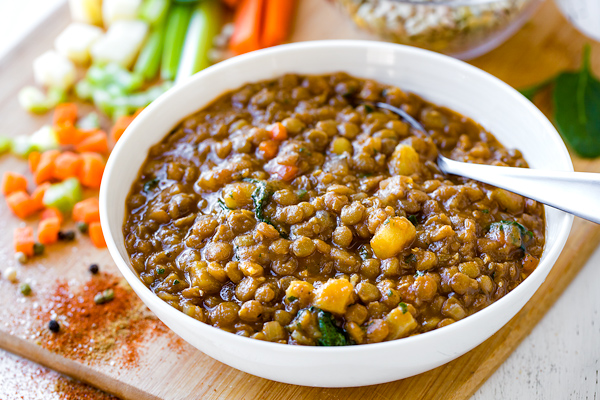
Fry a chopped onion in oil for 5 minutes. Add a teaspoon of cumin and a teaspoon of paprika if you have them — just salt and pepper works fine if you do not. Add 200g of red lentils (rinsed), a tin of chopped tomatoes, and 800ml of water or stock. Simmer for 25 minutes, stirring occasionally, until the lentils have broken down. Serve with bread.
Lentils are worth keeping a bag of permanently. According to the British Nutrition Foundation, lentils are one of the most affordable sources of protein and fibre available, with a single 100g dry serving providing around 25g of protein — comparable to meat at a fraction of the cost.
4. Tinned Tomato Pasta (€0.70 per serving)
A tin of chopped tomatoes costs around €0.45 in most supermarkets. A portion of pasta costs around €0.20. Together they make the foundation of probably the most universally useful cheap meal that exists.
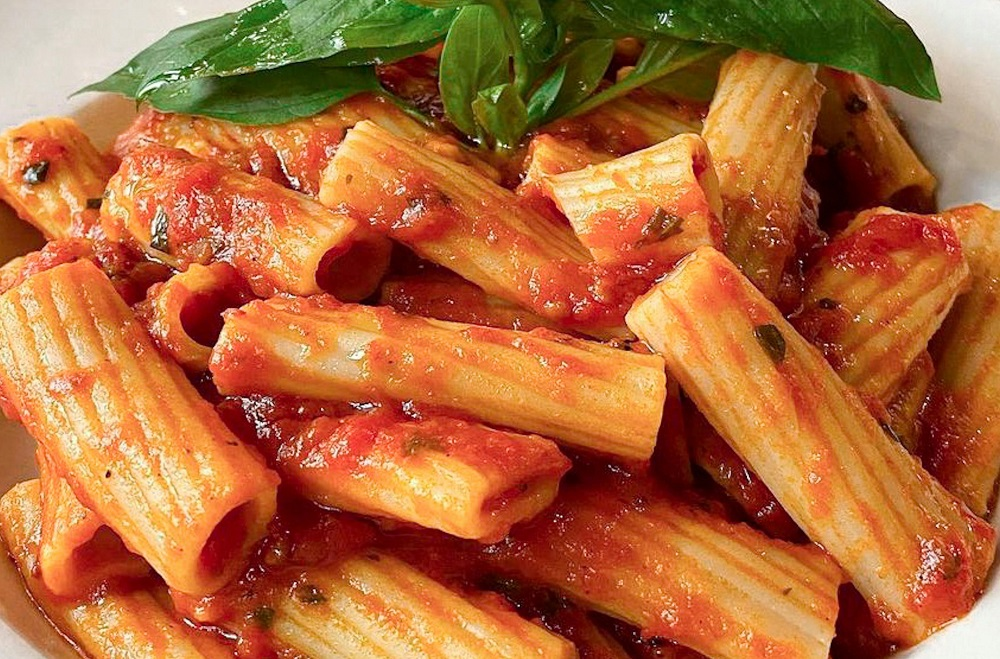
The basic version: cook pasta, heat a tin of tomatoes in a pan with garlic and olive oil, season well, combine. That is dinner. The version that tastes like you tried: add half a teaspoon of sugar to balance the acidity, a pinch of dried oregano or basil, and let the sauce simmer for 10 minutes to thicken before adding the pasta.
Additions that cost almost nothing: a tin of tuna stirred through at the end, a handful of frozen spinach, a few olives if you have them, capers, chilli flakes, or a spoonful of pesto from the bottom of the jar. Any one of these turns the same base recipe into something different.
5. Bean and Vegetable Stew (Under €1.20 per serving)
A tin of mixed beans or chickpeas, a tin of tomatoes, an onion, a carrot, and whatever else is in the fridge. Fried together with garlic and spice, this produces a thick, filling stew that works over rice, with bread, or on its own.
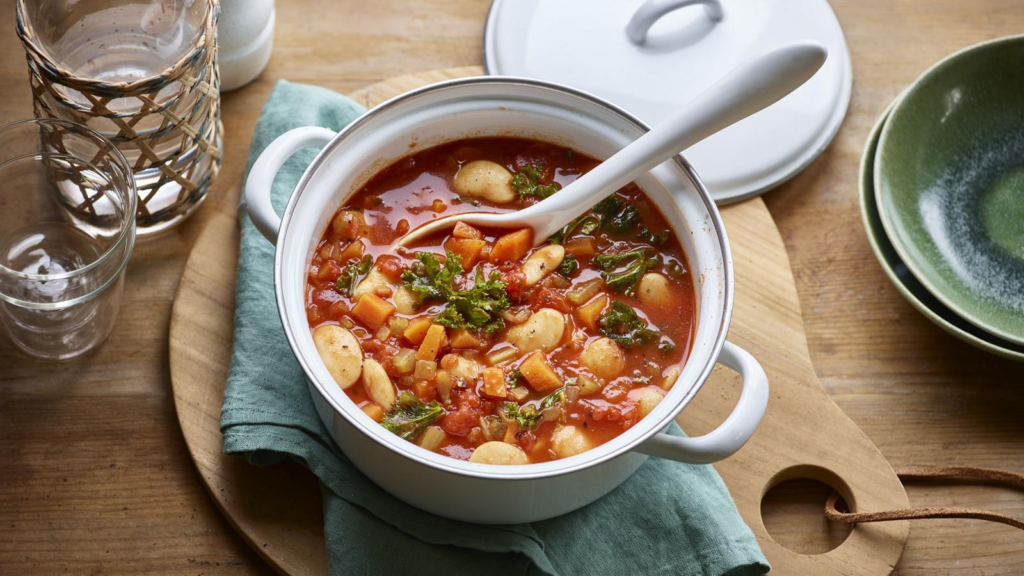
The cheapest version uses only tinned ingredients plus whatever root vegetables are going soft in the fridge — carrots, potatoes, parsnips, sweet potato. Root vegetables are almost always the cheapest fresh produce in European supermarkets. They add bulk and make the stew go further.
This is the meal to make when you have almost nothing left and need it to feed you for two days. Make a large pot, refrigerate it, and eat it for lunch and dinner. It actually improves overnight as the flavours develop.
What to Do If You Have Absolutely No Money Left for Food
If you genuinely cannot afford to buy anything this week, there are options that cost nothing or almost nothing.
Most European countries have food banks and community fridges — these are real services with no stigma attached to using them. In the UK, the Trussell Trust operates over 1,300 food banks and provided 2.89 million emergency food parcels in 2024/25 (Trussell Trust via House of Commons Library). To find your nearest one, visit trusselltrust.org or ask at your local council office.
If you have any dry goods left — even just salt, oil, and flour — flatbreads made from flour and water cost almost nothing and can fill a gap. Mix 200g of flour with enough water to form a dough, pinch off small pieces, and dry-fry them in a pan. Two minutes each side. They are not exciting, but they are food.
Quick Tips for Stretching a Tiny Budget
- Always buy dried legumes over tinned when you can — a bag of dried lentils, chickpeas or beans costs roughly half the price of tinned and makes twice as many portions. They take longer to cook but require no skill.
- Frozen vegetables are consistently cheaper than fresh and nutritionally comparable, according to research from the Institute of Food Research. Keep a bag of frozen mixed veg as your permanent cheap vegetable supply.
- Eggs are the cheapest protein per gram in most European supermarkets. A box of 6 eggs costs under €1.50 in most countries and covers six separate meals.
- Own-brand tinned goods are identical in nutritional terms to branded ones. Always buy own-brand tinned tomatoes, beans, and fish.
- Batch cooking once saves money and energy. Make a large pot of lentil soup or bean stew, divide it into portions, and refrigerate or freeze. You do not have to cook every day.
Related Situations You Might Also Be Dealing With
If the problem is not just this week but more ongoing, a practical budget grocery list built around these cheap staple meals can help you spend less consistently — not just in a crisis.
When money is tight, energy is often low too. If cooking even these simple meals feels like too much some evenings, the guide on what to eat when you’re too tired to cook covers the lowest-effort versions of the same cheap ingredients.
And if the issue is not knowing what to buy when you have very little in the fridge, there is a separate piece on what to cook when you have almost nothing left that walks through exactly this scenario.
FAQ
What are the cheapest meals you can make when broke? Pasta with tinned tomatoes, egg fried rice, lentil soup, and bean stew are the four cheapest proper meals available in most European kitchens. Each costs under €1.20 per serving using supermarket own-brand ingredients. They are filling, require minimal cooking skill, and use shelf-stable ingredients that last weeks.
How do you eat well when you have almost no money? Focus on four cheap staple ingredients: dried lentils or tinned beans, rice or pasta, tinned tomatoes, and eggs. These four things together cost under €10 and can produce 10–12 different meals. Avoid buying convenience foods or ready meals — they cost far more per calorie than cooking the same ingredients from scratch.
What cheap meals are most filling? Meals with high protein and fibre keep you full the longest. Lentil soup, pasta e fagioli (pasta with beans), and egg fried rice all provide substantial protein at very low cost. According to the British Nutrition Foundation, legumes like lentils and beans are among the most cost-effective sources of both protein and fibre available.
What can I cook with almost nothing in the fridge? If you have pasta, oil, and garlic — pasta aglio e olio. If you have rice and eggs — egg fried rice. If you have bread and eggs — scrambled eggs on toast. If you have flour, water, and salt — flatbreads. These four combinations require almost nothing and produce a real meal.
Sources
- House of Commons Library — UK food price inflation data, cost of living impact on households 2025–2026 — https://commonslibrary.parliament.uk/research-briefings/cdp-2026-0004/
- Disability Rights UK — Food insecurity statistics UK January 2026, 6.3 million adults affected — https://www.disabilityrightsuk.org/news/food-insecurity-rises-again
- Eurostat — Nearly 9% of EU households unable to afford a proper meal every second day — https://ec.europa.eu/eurostat/en/web/products-eurostat-news/w/ddn-20250828-1
- House of Commons Library — Food poverty, food bank usage and Trussell Trust statistics 2024/25 — https://commonslibrary.parliament.uk/research-briefings/cbp-9209/
- British Nutrition Foundation — Lentils and legumes as affordable protein and fibre sources — https://www.nutrition.org.uk/healthy-sustainable-diets/eating-well/plant-based-diets/
- Quadram Institute (formerly Institute of Food Research) — Nutritional value of frozen versus fresh vegetables — https://quadram.ac.uk/
- NimbleFins — Average UK household food spending per person per week, 2026 — https://www.nimblefins.co.uk/average-uk-household-cost-food