
You just got home. It’s 7pm. You open the fridge, stare at it for 30 seconds, and close it again. Ordering food feels expensive. Cooking a proper meal feels impossible. So you end up eating crackers over the sink and calling it dinner.
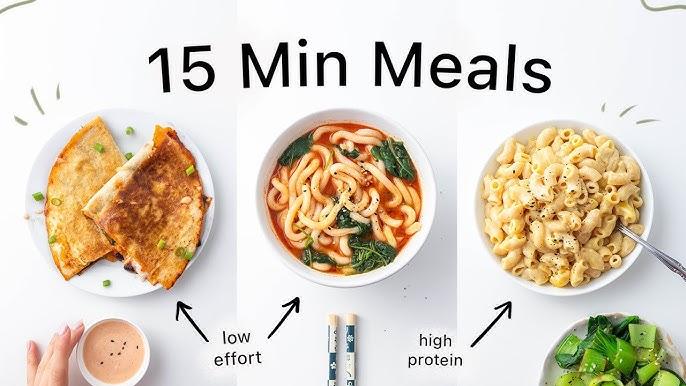
This happens to most working adults in Europe at least a few times a week. And yet most dinner content online assumes you have 45 minutes, a full pantry, and the energy to chop things.
This article is not that. It is for the other version of you — the one who has maybe 15 minutes, a few random ingredients, and no desire to do anything complicated.
The short answer: pasta with garlic and olive oil, eggs in any form, tinned fish on toast or rice, a frozen veg stir-fry, or an assembly dinner that requires no cooking at all. All of these take under 15 minutes and use ingredients most people already have.
Why After-Work Dinners Feel So Hard
It is not laziness. There is real research behind why cooking feels impossible after a full day of work.
A study published in Public Health Nutrition found that people working longer hours are significantly more likely to eat takeaways and skip home cooking — not because they do not want to eat well, but because time pressure and mental exhaustion make cooking the last thing on the list.
A separate European study confirmed that time constraints and a busy lifestyle are among the most consistently reported barriers to eating well, with people who cite a busy lifestyle being 46% less likely to eat vegetables regularly (NIH/PMC — Barriers to healthy eating in European adults).
Research from Datassential on European eating habits found that over a third of consumers in the UK, Germany and Spain rely on delivery services for their evening meal (Datassential European Breaks Research, 2024). Which means a huge number of people have already given up on cooking dinner and are paying for convenience every night.
The problem is not the person. The problem is not having a simple enough plan ready when the energy is gone. So instead of fixing this with more effort, the fix is knowing a small set of meals that require almost no thought.
5 Dinners You Can Actually Make After Work
These are not recipes with precise measurements. They are frameworks. Once you know them, you adapt them with whatever you have.
1. Pasta With Garlic, Oil and Anything (10–12 minutes)
Pasta aglio e olio is probably the most underrated quick meal in Europe. You put pasta on to boil, heat olive oil with a few sliced garlic cloves, maybe add chilli flakes. That is it. The whole thing takes as long as the pasta takes to cook — around 10 minutes.
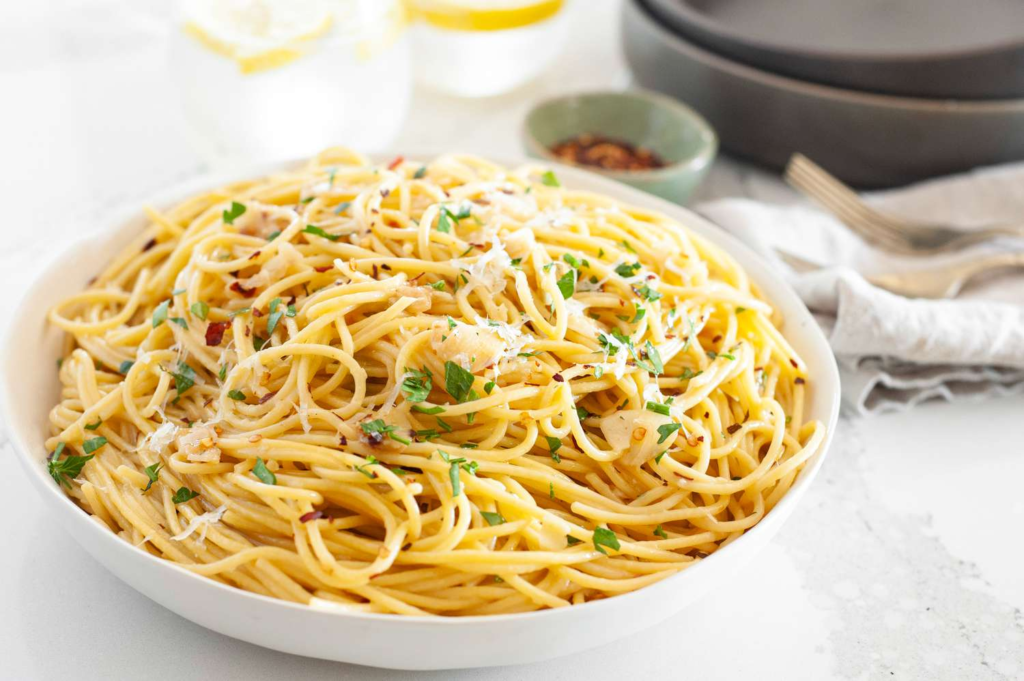
Add whatever else is around: a tin of anchovies (they dissolve into the oil and make it taste far better than it sounds), cherry tomatoes, leftover chicken, a handful of spinach tossed in at the end. None of it is required. The base meal on its own — pasta, olive oil, garlic, salt, and parmesan if you have it — is genuinely good and genuinely fast.
This works because you almost certainly have these ingredients already. Dried pasta, olive oil and garlic are staples in virtually every European kitchen. No trip to the shop, no planning required.
If pasta is something you eat often and want to make more filling without spending more, there is a practical guide on how to make pasta more satisfying on a budget that covers the exact additions worth keeping around.
2. Eggs in Any Form (8–10 minutes)
Eggs are probably the most versatile fast food that exists — and they work for dinner, not just breakfast.
A two-egg omelette with whatever is in the fridge (cheese, leftover vegetables, tinned tomatoes, ham, mushrooms) takes about 8 minutes. Scrambled eggs on toast takes 5. A fried egg over leftover rice with a splash of soy sauce takes under 10. Shakshuka — eggs poached in a spiced tomato sauce — sounds impressive but is just a tin of chopped tomatoes with some spice, heated in a pan, with eggs cracked in. It takes 15 minutes and looks like you tried.
Eggs are cheap, fast, protein-dense, and require almost no skill. According to data from the UK National Diet and Nutrition Survey, eggs remain one of the most commonly consumed protein sources among working adults eating at home (UK NDNS Rolling Programme, PMC). There is a reason for that.
Keep a box in the fridge and a tin of tomatoes in the cupboard. You always have dinner covered.
3. Tinned Fish on Rice, Pasta or Toast (10 minutes)
A tin of tuna, sardines, mackerel or salmon on top of rice, pasta, or toast with whatever green thing is in your fridge — cucumber, lettuce, frozen peas, baby spinach — is a complete meal. Add lemon juice and a drizzle of olive oil. Done.
Sardines in particular are worth keeping several tins of. They are inexpensive, they keep for years, they are high in protein and omega-3s, and they taste better than most people expect when prepared simply. BBC Good Food has a useful guide on how to cook with tinned fish if you want to go beyond the basics.
The combination of tinned fish, microwave rice and something green is not a sad meal. It is a practical one. It takes 10 minutes, costs under €3, and covers your protein and carbohydrates in one go.
4. Frozen Veg Stir-Fry With Rice or Noodles (12–15 minutes)
A bag of frozen stir-fry vegetables, a packet of microwave rice or pre-cooked noodles, and a basic sauce (soy sauce, sesame oil, a crushed garlic clove) gives you a proper dinner in about 12 minutes.
The key is keeping these ingredients on standby. Microwave rice packets cost under €1.50 in most European supermarkets. A bottle of soy sauce lasts months. A bag of frozen vegetables keeps for weeks. Together they cost less than a coffee and eliminate the “nothing to eat” problem on the worst evenings.
The same method works with frozen dumplings or gyoza, which most supermarkets now carry. Pan-fry for 5 minutes, mix soy sauce with a drop of vinegar for dipping, and you have dinner. Not everything needs to be cooked from scratch. Convenience ingredients used well are still home cooking.
5. The Assembly Dinner — No Cooking Required (5 minutes)
Sometimes the right move is to not cook at all.
An assembly dinner is anything you put on a plate without turning on the stove. Bread, cheese, sliced meat, olives, pickles, hummus, raw vegetables, hard-boiled eggs you prepped earlier, tinned fish, leftover dips, fruit. In France and Spain this is just a normal way to eat — a spread of things on a board that you graze through without ceremony.
It requires nothing. It takes 5 minutes. It is perfectly adequate as a dinner.
If you often find yourself at the worst-case scenario — completely out of energy, nothing prepared, no motivation to do anything — the guide on what to eat when you are too tired to even think about cooking goes further into the lowest-effort options when even these feel like too many steps.
What to Do If You Have Absolutely Zero Energy Left
If even pasta sounds like too many steps tonight, here is the absolute minimum:
Microwave rice packet + tin of anything (chickpeas, tuna, lentils, tomatoes) + salt + olive oil. No chopping, no timing, no decisions. Open, heat, eat. This takes 4 minutes and it is food.
Keep these two things stocked at all times: microwave rice packets and a few tins. They are your fallback when everything else fails. Cost: under €5 total. Value: enormous on the nights you need them.
Quick Tips Worth Knowing
- Keep a permanent emergency shelf: dried pasta, tinned tomatoes, tinned fish, olive oil, garlic, and microwave rice. These seven things together can produce at least eight different dinners with no shopping required.
- Boil a batch of eggs at the weekend. Hard-boiled eggs in the fridge mean part of dinner is already done.
- Frozen vegetables are nutritionally comparable to fresh. Research from the British Nutrition Foundation confirms that freezing preserves the majority of vitamins and minerals (British Nutrition Foundation). Do not feel bad about using them regularly.
- If you cook pasta, make double the portion and refrigerate the extra. Cold pasta reheats in 2 minutes the next evening and halves your cooking time that night.
- A rice cooker costs €20–30, requires zero attention, and makes perfect rice every time. Worth buying if you eat rice more than twice a week.
Related Situations You Might Also Be Dealing With
If after-work dinners are consistently difficult, the root problem is usually not having the right things in the kitchen. A practical budget grocery list for the week built around these emergency meals costs very little and removes the “nothing to eat” problem almost entirely.
For mornings when the same feeling hits before work, there is a separate piece on quick breakfast ideas when you are running late — same low-effort approach, different meal.
FAQ
What is the quickest dinner to make after work? Pasta with olive oil and garlic (aglio e olio) takes around 10 minutes and uses ingredients most people already have. Scrambled eggs on toast takes under 8 minutes and requires no skill at all. Both are proper meals, not snacks.
What can I eat for dinner when there is nothing in the fridge? Check your cupboards before assuming there is nothing. Dried pasta, tinned tomatoes, tinned fish, eggs, olive oil and garlic are all shelf-stable and together produce multiple different dinners. A microwave rice packet with a tin of chickpeas and salt is a complete dinner in 4 minutes.
Is it okay to eat simple food like toast or eggs for dinner? Yes. Some nights the right answer is eating something simple rather than skipping dinner or spending money on takeaway. Eggs on toast is nutritionally reasonable. Cereal is less ideal as a regular dinner because it lacks protein and fat, which affects how full you feel and how you sleep.
How do I stop ordering takeaway every night after work? The main reason people order takeaway is not having ingredients ready and not having a simple enough plan decided in advance. Keeping 6–7 staples on a dedicated shelf means you can always make something without planning. The decision needs to happen at the supermarket, not when you are already home and tired.
Sources
- Public Health Nutrition / Cambridge Core — Association between hours worked in paid employment and diet quality, takeaway consumption in UK adults — https://pmc.ncbi.nlm.nih.gov/articles/PMC10260640/
- NIH/PMC — Exploring barriers to healthy eating in European adults — time constraints, busy lifestyle and dietary behaviour — https://www.ncbi.nlm.nih.gov/pmc/articles/PMC6060804/
- UK National Diet and Nutrition Survey (NDNS) — Frequency of eating out and takeaway meals at home among UK adults — https://www.ncbi.nlm.nih.gov/pmc/articles/PMC4404110/
- Datassential — How Europeans eat during evenings, use of delivery services in UK, Germany and Spain — https://datassential.com/resource/breaks-influence-europe-connection-foodexploration/
- BBC Good Food — Tinned fish recipes and preparation guidance — https://www.bbcgoodfood.com/recipes/collection/tinned-fish-recipes
- British Nutrition Foundation — Nutritional value of frozen vs fresh vegetables — https://www.nutrition.org.uk/healthy-sustainable-diets/starchy-foods-sugar-and-salt/vegetables-and-fruits/